
In the industrial world, everything is measured, optimized, and monitored. Machines have their cycles, wear thresholds, and maintenance schedules. Tools are replaced, serviced, recalibrated. Yet one dimension often remains underestimated: how workstations are actually organized. In workshops, practices, and precision environments, it’s not always the machines that reach their limits first. It’s the work configurations, the available supports, the repetition of precise gestures—often subtle, yet continuous.
The blind spot of modern performance
For decades, industrial performance has relied on a simple logic: produce more, better, faster, with fewer errors. This requirement has led to spectacular advances in quality, precision, and reliability.
But it has also created a blind spot:
- The more reliable machines become, the more pressure shifts onto workstation organization.
- The more precise gestures must be, the more they rely on identical movement patterns.
- The more controlled the pace, the more strain becomes prolonged over time.
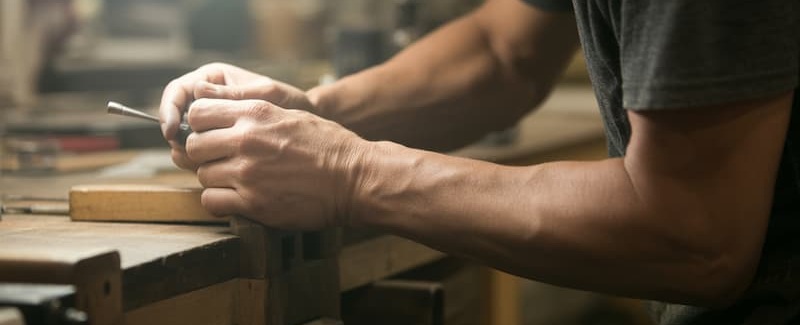
On the ground, this translates very concretely: arms held for long periods without structured support, fine repetitive movements performed in the same area, workstations designed for the task but rarely for operational continuity. These setups gradually become standard, without ever really being questioned.
When certain limits become part of the system
A machine showing signs of weakness is stopped. A defective tool is replaced. A poorly adjusted station is corrected.
But a poorly structured workstation organization persists. It adapts. It holds. It becomes habit. Until it gradually affects the consistency of gestures and the continuity of operations.
This may be a true industrial issue: having integrated certain organizational limits as part of normal production.
2026: a turning point
This observation resonates strongly today. Teams are evolving. Precision trades are struggling to recruit. The transfer of skills is becoming a strategic challenge.
In this context, continuing to treat workstation organization as a secondary adjustment variable is no longer sufficient—neither operationally nor economically.
The question is no longer just : How do we produce ?
But : How do we structure workstations that can sustain activity over time?
The common mistake: trying to “add” solutions
Faced with this issue, some responses have emerged—often spectacular: rigid exoskeletons, wearable equipment, complex technical systems. Their logic is clear: add an external structure to frame the gesture.
But in reality, one thing quickly becomes evident: what constrains movement is often worked around.
In precision professions, freedom of movement is essential. So is fluidity. And above all, adoption by teams. A solution that does not integrate naturally into the workstation is difficult to sustain over time.
Another approach: supporting rather than constraining
This is where a shift in logic occurs. Instead of adding constraints, some solutions aim to structure the workstation. Instead of rigidifying movement, they support it. Instead of imposing organization, they integrate into the reality of the activity.
In practical terms, this means supports positioned in the right place, at the right height, capable of following movements without hindering them. Armrests that move with the user, stabilizing support and contributing to smoother gestures—without changing working methods.
This discreet yet immediately operational approach helps preserve continuity while respecting existing expertise.

When solutions stand the test of time
In this context, one point is worth emphasizing: it is paradoxical to try to optimize workstations with complex solutions when simplicity is often the most effective lever.
The devices designed by Perdelle follow this logic. Their design is based on mechanical durability, ease of integration, and repairability.
In practice, the structures remain stable over time. Only certain deliberately replaceable elements (arm supports and elastic components) evolve with use. Their lifespan is measured in years—often well beyond five.
This reflects a clear approach: offering solutions that integrate sustainably into the workstation and support activity without adding complexity.
Rethinking performance
The industrial performance of tomorrow will not depend solely on machine speed or tool precision. It will also depend on the ability to structure workstations, organize support, and sustain gestures over time.
Rethinking the workstation means strengthening operational stability, consistency of movement, and quality of execution over the long term.
What if true industrial performance simply meant better organizing what supports every gesture, every day ?