
Since its creation, Perdelle has pursued a simple ambition: to ease the daily work of professionals by offering reliable, precise, and discreet mechanical support. Our devices—Néo, Swan, and Taya—are designed to support demanding movements. This vision, focused on real usefulness and comfort, has always followed a principle of simplicity: refined mechanics, carefully selected materials, and constant attention to product lifespan.
In 2024–2025, we chose to go one step further in this responsibility. For the first time, Perdelle carried out a full Bilan Carbone® of its activities and its three models. Not to project a superficial environmental stance, but to precisely understand our impact, identify areas for improvement, and integrate this perspective into our future designs.
This first assessment marks a foundational step: it provides an objective, transparent, and measured view of our footprint, and lays the groundwork for continuous improvement aligned with Perdelle’s DNA.
Why measure our carbon footprint now ?
An approach aligned with our industrial DNA
Perdelle was born from a simple idea: delivering comfort without complexity, through refined mechanics that support movement without constraining it. This sense of “just what’s necessary” goes beyond ergonomics—it naturally extends to how we design and manufacture our devices.
Conducting a Bilan Carbone® fully aligns with this philosophy.
Measuring the environmental impact of our activities means applying the same rigor we use for arc precision, pulley adjustment, or elastic balancing.
It means understanding, with the same attention to detail, where every kilogram of CO₂ comes from and how our industrial choices directly influence this footprint.
For us, consistency is essential : a device designed to improve workplace health must also be produced responsibly, within a controlled and measurable framework.
A commitment to transparency and honesty
This first Bilan Carbone® is neither a marketing argument nor a communication exercise. It is, above all, a transparency effort: acknowledging our impacts as they are—without simplification or minimization.
The assessment was conducted using ADEME’s official methodology, with the support of the LITA firm. The full report is publicly available on our website so that anyone can access the complete data :
https://perdelle.com/donnees-scientifiques/
This approach aims to establish the foundations of a sincere and credible trajectory.
To move forward, we must first measure. To reduce, we must understand.
And to improve, we must be able to accept the numbers as they are.
A strategic tool to guide future decisions
This assessment is not an administrative step—it is a management tool.
It will help guide:
- our choice of materials,
- the design of future models,
- our relationships with suppliers,
- the optimization of logistics,
- and the prioritization of reduction actions.
The results show, for example, that emissions do not mainly come from our own operations, but from what we purchase: services, machining, raw materials.
This means a large part of our improvement potential depends on stronger collaboration with our industrial partners.
Measuring our carbon footprint today means preparing tomorrow’s products—devices that are increasingly comfortable for users, designed with growing attention to efficiency and overall impact.
What our first Bilan Carbone® teaches us
A footprint dominated by indirect emissions (97%)
The main takeaway is clear: most of our footprint does not come from our internal activities, but from outsourced operations.
Indeed, 97% of Perdelle’s emissions fall under Scope 3—indirect emissions:
cutting and machining, logistics, maintenance, professional services, supplier energy use, inbound and outbound freight… the entire external value chain that makes our devices possible.
This result is logical. Perdelle operates with a lightweight and flexible industrial model. We focus on design, assembly, ergonomic quality, and mechanical precision, while heavier operations are handled by specialized partners.
This model has an advantage:
👉 a Perdelle device can be produced with limited internal resources, without requiring energy-intensive infrastructure.
But it also implies a measurable reality:
👉 our footprint strongly depends on the practices of our subcontractors and suppliers.
This will be a key factor moving forward: reducing our emissions will largely depend on collaboration across our value chain.
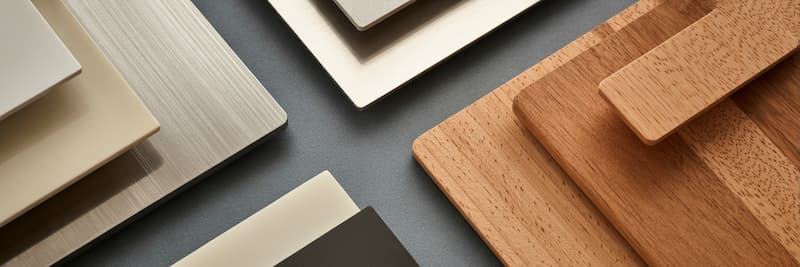
The weight of raw materials: steel, aluminum, plastics
The second key insight concerns materials.
Unsurprisingly, metals are the main carbon contributors :
- steel, widely used in Néo and Swan,
- aluminum, which has a particularly high carbon intensity,
- technical plastics, used in smaller but still significant quantities.
The analysis confirms a simple principle:
➡️ material choice directly determines a product’s carbon footprint.
One kilogram of steel does not “cost” the same CO₂ as one kilogram of wood; an aluminum component does not have the same impact as recycled steel.
The assessment clearly shows that a device’s weight reflects not only its robustness or comfort, but also its carbon signature.
For Perdelle, this insight is valuable. It guides future designs toward lighter structures, more efficient material combinations, while preserving ergonomic precision.
Low and well-controlled internal emissions
Another important finding:
our internal emissions are low and well managed.
The Besançon site—its heating, electricity, and equipment—accounts for less than 3% of total emissions.
This reflects a compact facility, moderate energy use, and an organization focused on efficiency rather than complexity.
This internal efficiency reinforces the consistency of the Perdelle model :
➡️ a small direct footprint, a compact structure, and efforts focused where they matter most—design, materials, and the external value chain.
Three devices, three carbon footprints
Analyzing each model provides key insights into how design choices directly influence impact.
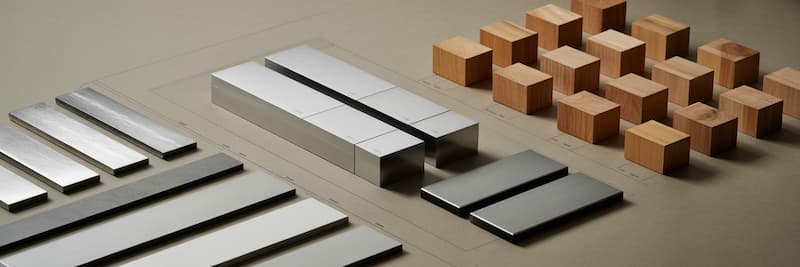
Perdelle Néo: robustness and metallic density
With 12.27 kgCO₂e in direct inputs, Néo is the most emblematic and robust model.
Its carbon footprint is mainly due to:
➡️ a steel-heavy structure, dense and built to last.
Perdelle Swan: ergonomic performance and aluminum use
With 13.75 kgCO₂e, Swan has a slightly higher footprint.
The reason:
➡️ the integration of aluminum, more carbon-intensive than steel.
It reflects a trade-off: improved ergonomic responsiveness at a higher material impact.
Perdelle Taya: a more efficient design
With only 6.54 kgCO₂e, Taya has half the footprint of the other models.
This is due to:
- a lighter structure,
- the use of locally sourced beech wood (low carbon impact),
- a redesigned architecture balancing ergonomics and efficiency.
Taya demonstrates that an ergonomic device can be effective, durable, and comfortable while significantly reducing its footprint.
Together, these models illustrate a transition toward more efficient, performance-driven, and carbon-conscious design.
An approach supported by LITA
A rigorous collaboration
To conduct this assessment, we partnered with LITA, led by Jean-Louis Lacoste, a certified expert in the Bilan Carbone® methodology.
Their expertise in emissions factors, industrial flows, and value chains enabled a precise and compliant assessment. The published report is fully based on their validated data.
Why expert support was essential
A Bilan Carbone® requires more than simple data collection. It involves:
- emission factors from ADEME’s Base Carbone®,
- detailed activity data (materials, expenses, logistics),
- accurate allocation of emission sources,
- structuring across Scopes 1, 2, and 3,
- and rigorous interpretation.
For a company like Perdelle, this expertise ensured a reliable and meaningful analysis.
What this changes for Perdelle
A new way of designing
From now on, every new product will integrate carbon impact as a design parameter:
- reducing structural weight,
- selecting lower-impact materials,
- improving repairability and end-of-life considerations,
- optimizing metal components,
- embedding efficiency from the earliest design stages.
Taya already reflects this direction. Future models will continue along this path.
Stronger collaboration with suppliers
Because 97% of our impact comes from partners, progress depends on:
- machining and cutting facilities,
- raw material suppliers,
- logistics providers,
- maintenance and subcontractors.
The assessment highlights where improvements and uncertainties lie, enabling better-informed decisions through stronger collaboration.
A foundation for future action
No formal action plan has yet been defined—this is normal for a first assessment.
It provides:
- a reliable baseline,
- a clear view of key emission sources,
- consistent improvement pathways,
- a framework for building an environmental strategy.
Next steps will involve setting priorities, realistic goals, and a progressive approach aligned with our size and model.
Conclusion: a key first step
This first Bilan Carbone® is a major milestone for Perdelle.
More than just numbers, it provides a clear understanding of our real impact and confirms that our lightweight, design-focused model can evolve toward greater efficiency.
It highlights key levers—materials, logistics, outsourcing, and design choices—and validates early progress, particularly with Taya.
This is not an endpoint—it is a starting point.
It will guide our priorities, strengthen collaboration, and inform future decisions.
At Perdelle, we move forward pragmatically: designing useful, reliable solutions that respect professional gestures, while progressively integrating a controlled carbon vision.
This first Bilan Carbone® clarifies that path and establishes a lasting dynamic of continuous improvement.